
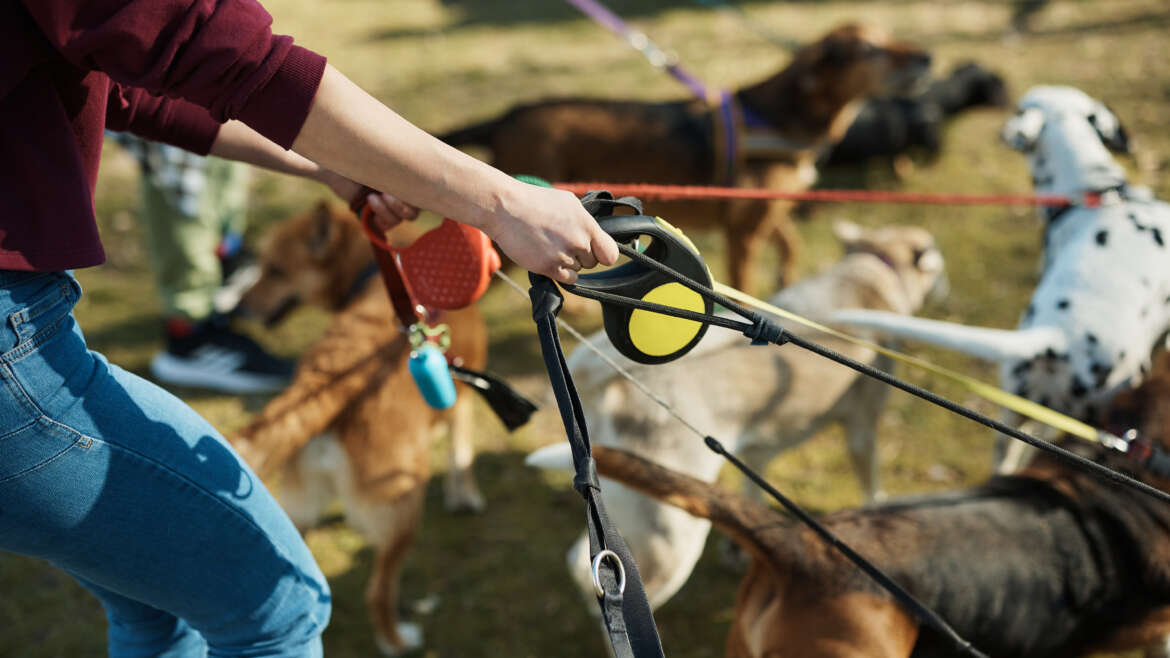
A leash keeps your dog safe by preventing them from darting into traffic, chasing after distractions, or wandering too far from you. It also ensures that your dog complies with local leash laws, making walks safe and enjoyable for everyone.
Types of Dog Leashes
- Standard Leash
- Best For: Everyday walks.
- Features: Typically 4–6 feet long, made of nylon, leather, or rope.
- Pros: Durable and easy to control.
- Retractable Leash
- Best For: Dogs who love to roam (in safe, open areas).
- Features: Adjustable length, up to 30 feet.
- Pros: Allows more freedom.
- Cons: Less control, can tangle easily.
- Training Leash
- Best For: Puppies or obedience training.
- Features: Longer length (10–50 feet).
- Pros: Perfect for recall training and teaching commands.
- Hands-Free Leash
- Best For: Joggers, hikers, or multitasking dog owners.
- Features: Worn around the waist or crossbody.
- Pros: Leaves your hands free while keeping your dog secure.
- Slip Leash
- Best For: Quick trips or training.
- Features: Combines collar and leash in one piece.
- Pros: Easy to put on and off.
- Cons: Not ideal for dogs that pull excessively.
- Chain Leash
- Best For: Heavy chewers.
- Features: Metal chain instead of traditional materials.
- Pros: Chew-proof and durable.
- Cons: Heavier and less comfortable to hold.
Factors to Consider When Choosing a Leash
- Size and Strength of Your Dog
A large, strong dog needs a durable leash with secure hardware, while a small dog may prefer a lightweight option. - Behavior
If your dog pulls, a standard or no-pull leash combined with proper training might work best. - Activity Level
For active dogs and their humans, a hands-free leash or one designed for jogging could be ideal. - Material
Nylon and leather are common choices, but consider weather resistance, grip, and durability.
Leash Safety Tips
- Check Regularly: Inspect for frays or damage that could lead to breakage.
- Use Proper Length: Shorter leashes offer better control in crowded areas, while longer leashes are great for open spaces.
- Avoid Tangles: Keep an eye on the leash to prevent it from wrapping around objects or people.
- Leash Laws: Always follow local regulations to avoid fines and ensure public safety.
Final Thoughts
A good leash is an investment in your dog’s safety and your peace of mind. Whether you’re exploring trails, strolling through the park, or training your pup, there’s a leash to suit every need. By choosing the right leash, you’re not just walking your dog—you’re strengthening the bond between you and your best friend.
What’s your favorite leash for your pup? Let us know in the comments below!
